A French horse farm required reliable lighting for its stables and associated storage areas. The site includes timber roof structures, hay bales, narrow working aisles and areas where staff need to move safely around stored materials. The project used 62 LockLock LED tri-proof lights rated at 60W each. According to the customer feedback provided for this case, the result was very well received.
|
Location |
France |
|
Application |
Horse farm and stable lighting |
|
Installed product |
LockLock LED tri-proof light |
|
Project quantity |
62 fixtures |
|
Fixture power |
60W per fixture |
Horse barns and stables are working environments, not simple storage sheds. Staff may need to inspect animals, move feed, handle hay, clean aisles, access equipment and work safely during early mornings or evenings. The lighting must also suit a building that may contain dust, hay, moisture, timber structures and regular cleaning activity.
A good horse stable lighting layout should reduce deep shadows along aisles and around stored materials while avoiding harsh glare that can make animals or handlers uncomfortable. Fixture placement, mounting height and the distance between luminaires should be reviewed together with the stable layout. The right product is only one part of the final result; the lighting plan and installation position are equally important.
The French horse farm installed 62 x 60W LockLock LED tri-proof lights across the stable and farm storage areas. The supplied photographs show the fixtures mounted beneath the roof structure, with long linear luminaires following the working direction of the building. This arrangement is well suited to aisles and storage passages because it creates a continuous line of light rather than isolated bright points.
The installed product is the LockLock LED tri-proof light, a sealed linear fixture intended for demanding indoor and semi-industrial environments.
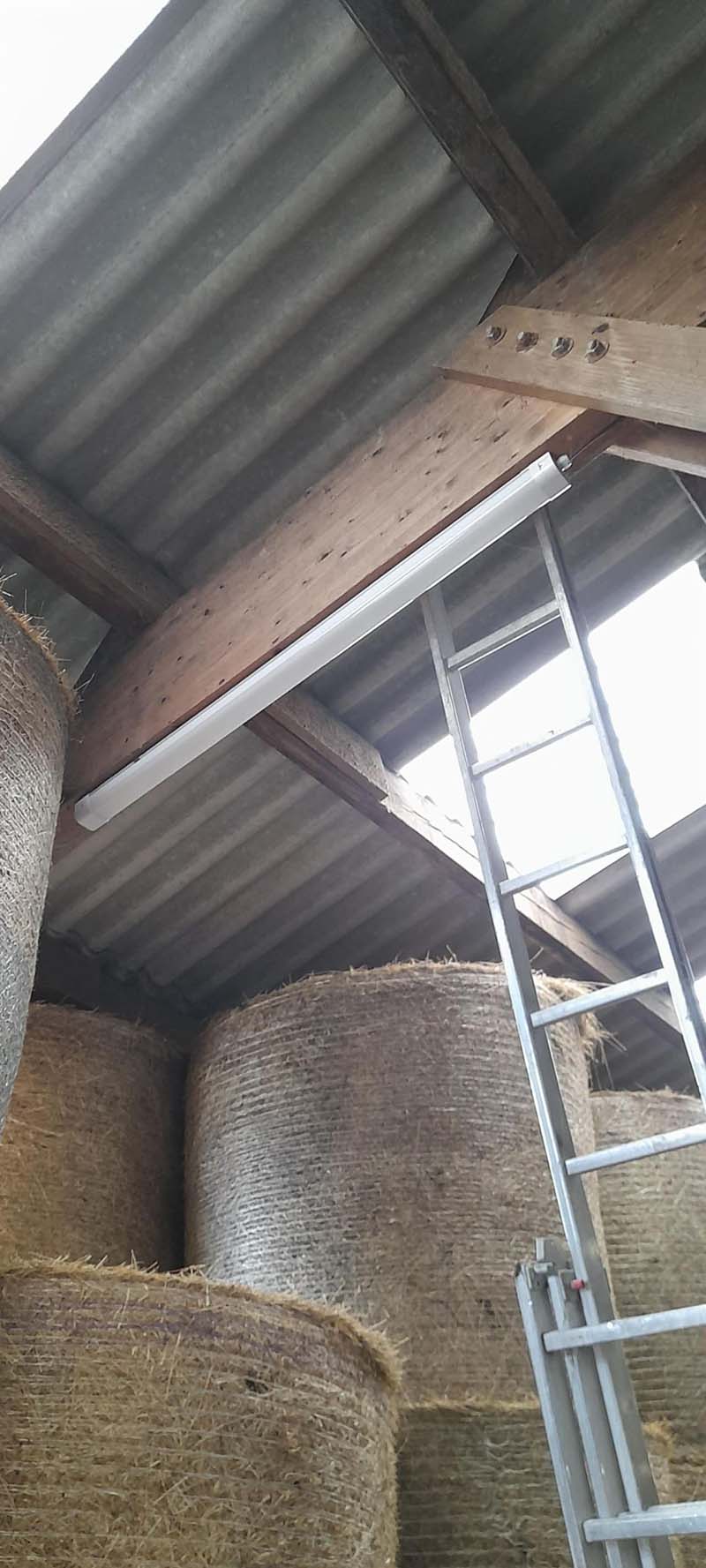
LockLock LED tri-proof light installed beneath the roof structure in the French horse farm
Hay storage introduces specific practical concerns. Large bales can obstruct light from one side of an aisle, and dust or loose material can make maintenance more demanding. Linear fixtures positioned along the aisle help staff see the floor, storage edges and access routes more clearly. A sealed tri-proof housing is also a sensible specification to review where dust, humidity or cleaning exposure may be present.
In the supplied installation photographs, the LockLock fixtures are mounted between the timber roof members and distributed along the length of the building. The result supports a more consistent visual environment for working around hay bales, stable partitions and storage equipment. It is important not to claim a universal lux level for every horse farm: final illumination depends on ceiling height, fixture spacing, surface reflectance and the work carried out in each zone.
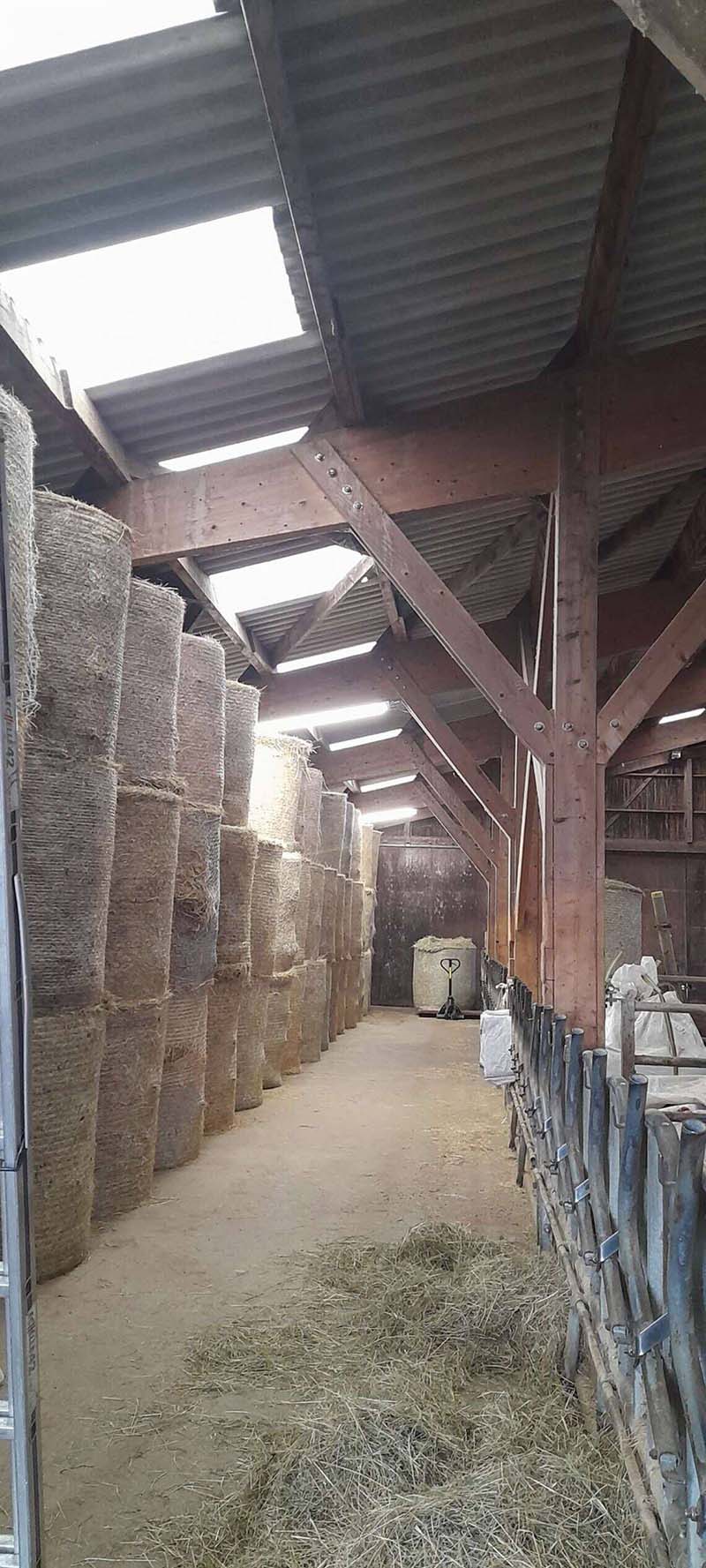
Linear LockLock fixtures provide continuous illumination along the French horse farm storage and stable aisle
LED tri-proof lights are commonly considered for barns, stables, workshops, feed rooms and storage areas because they combine a linear form with protection against demanding environmental conditions. In a horse farm, this can help simplify cleaning and reduce the number of exposed components around hay, dust and routine handling activity.
The LockLock Series also gives the project a practical replacement path when an existing building needs a clean, continuous light source without a major change to the roof structure. The 60W configuration used in this case was selected as part of a 62-fixture installation. Other projects should be calculated separately rather than copying the quantity directly, because stable size, ceiling height and aisle geometry will vary.
The customer feedback for this French horse farm project was very positive. The completed installation provides a clear example of how a farm can upgrade stable and storage lighting with a consistent LED linear system. The photographs show the final fixtures in use beneath the roof structure and along the working aisles, where visibility is important for both daily farm operations and safe movement around the horses and stored hay.
The supplied project information does not include a measured lux report, energy-savings calculation, installation date or detailed photometric plan. Those values should be confirmed separately if the project is used for a formal compliance report or return-on-investment calculation.
Before selecting horse stable lighting, prepare the building length and width, ceiling height, roof and beam locations, stall and aisle arrangement, hay storage position, cleaning method, electrical supply and operating schedule. Identify areas that need general orientation lighting and areas that need brighter task lighting, such as grooming, veterinary, farrier or feed-handling zones.
The lighting designer should then review fixture spacing, glare, shadows, maintenance access and protection from accidental contact. A site-specific lighting calculation can confirm whether the selected fixture quantity and mounting layout provide the required coverage. For horse facilities, a comfortable and even distribution is generally more useful than placing a small number of extremely bright fixtures.
For the product specification, see the LockLock LED tri-proof light product page
For wider industrial and agricultural applications, review Unicornlite warehouse and manufacturing lighting solutions and request a project-specific proposal.
For additional waterproof fixture options, visit the LED tri-proof light collection.
This French horse farm case demonstrates the practical use of 62 x 60W LockLock LED tri-proof lights in a stable and hay storage environment. The linear arrangement follows the working direction of the building and supports clearer visibility across aisles, stored hay and stable areas. With positive customer feedback and real installation photographs, the project offers a useful reference for horse farms looking to improve their stable lighting. Every new site should still be checked through a separate lighting plan that considers the animals, staff, building structure and environmental conditions.


